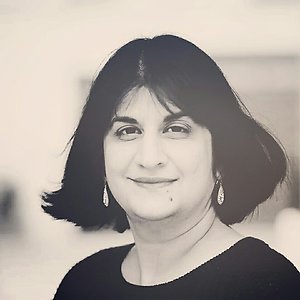
Hi, I'm Amrit.
I am a qualified and accredited (MBACP Accred.) Senior Psychotherapist and Specialist Counsellor (specialising in Trauma following sexual violence and rape) with a Masters degree in Existential Psychotherapy and Counselling.
‘"When you are in the middle of a story it isn't a story at all, but only a confusion; a dark roaring, a blindness, a wreckage of shattered glass and splintered wood; like a house in a whirlwind, or else a boat crushed by the icebergs or swept over the rapids, and all aboard powerless to stop it. It's only afterwards that it becomes anything like a story at all. When you are telling it, to yourself or to someone else." M Atwood (1996)
Your story: it matters.
...it isn't over yet;
~~~~~~~~~~~~~~
I am grounded, therapeutically agile and deeply compassionate. I am Human first, therapist second — on a level with clients, not a pedestal. I bring a wealth of lived experiences that inform my practice and allows me to support people from a place of knowing, not just from my training (although I have that too).
As a therapist, I have an incredibly privileged insight into the paradoxes of human nature. I make weekly journeys to the greatest depths of human trauma: death, infertility, infidelity and depression, as well as the seemingly smaller moments of pain: a crush we might have on another that goes unnoticed, or feelings of jealousy and resentment towards a close friend.
I have acclimatised myself to these things not just by reading books and studying, but by knowing my own nature and confronting my own shadows, the complicated, painful and embarrassing aspects of myself that are collectively relegated into a murky puddle of shame within our culture.
Because of this, clients can share anything and everything with me - and I will meet it with curiosity, compassion and care.
A good therapist offering a combination of empathy and challenge, both a gentle hand and a challenge, will always help us to return to a place of balance when we come up against it all. I am, unconditionally, on the side of my clients. I've got your back, and I am here to help you navigate the things we so often find hard: trusting others, coping with our emotions, communicating effectively, understanding ourselves, honouring our potential, feeling relatively authentic, confident and unashamed and everything else we encounter from birth to death.
My clinical work has been within the NHS (The Havens, a sexual assault referral centre based within King's College Hospital),the prison service, detention centres and various mental health and wellbeing organisations.
Additionally, I was also a Staff Trauma Counsellor at the Imperial College Healthcare NHS Trust . I worked as part of the Trust's staff support service known as CONTACT and joining a team of professionals supporting the Trust's wellbeing response to the COVID-19 pandemic.
I am now working at Help for Heroes , an excellent organisation that supports ex veterans and their families, as their Senior Counsellor.
I completed a post-graduate certificate in Trauma at the Tavistock and Portman NHS Foundation Trust in 2017 following my MA studies.
I am also fully trained in EMDR and use this regularly alongside trauma-focused therapy.
I am registered with BUPA and you can find me here: https://www.finder.bupa.co.uk/Consultant/view/310118
In addition to individual therapy, I provide clinical supervision to trainees and honorary counsellors and facilitate interpersonal and reflective groups for women.
I have a deep vested passion and experience in working with trauma in the aftermath of rape and violence. I work with both women and men who have been raped or sexually assaulted. In 2018, I participated in a live TV interview on an Asian channel where I talked a lot about trauma following sexual assault and rape and if you would like to have a look, here is the link: Mental Health Matters .
"When it comes to talking about trauma, we always walk the delicate line between too much and not enough, between what is too explicit and what is secretive, what is traumatizing and what is repressed and thus remains in its raw, wordless form. We are usually caught in that binary between the two extremes because when it comes to trauma, regulation is always a challenge.
Galit Atlas, Emotional Inheritance: A Therapist, Her Patients, and the Legacy of Trauma
What I have come to understand is that when someone experiences violence, their very sense of being is severed from the rest of life, fragmented, disconnected, amputated from the body of humanity. My job is to help you, slowly, to understand what is going on, to then try and pick up these broken pieces and see which ones you would like to hold on to and which ones to let go off. We will look at the loneliness and isolation; the shame and self-loathing that often arise; seeking ultimately to find meaning in what can be quite a confusing and chaotic world.
Susan J. Brison in her powerful book Aftermath (Violence and the Remaking of a Self) describes this process succinctly...
"the tension between living to tell and telling to live, that is, between getting (and keeping) the story right in order to bear witness and being able to rewrite the story in ways that enable the survivor to go on with her (or his) life."
I am trained in Existential Psychotherapy but the longer I do this work the more I realise that method and training is not as important as the bond and relationship between us. If you can trust me, we are halfway there. And this is what helps.
My commitment
I work hard to challenge the myths surrounding violence and the language often used when speaking of a such experiences as language is a powerful thing - it can further embed myths or it can make people see the truth and see it for exactly what it is -- not hide it or worse yet pretend it isn't when it is.I will be here for you. I will stay. I will listen and support you. And I can and want to help.
Questions before we start
Please just ask. No question is irrelevant.